Care Home Fire Door Checks, A Practical Inspection Schedule for Compliance
Care home fire door checks are a high priority compliance task because fire doors help maintain compartments, protect escape routes, and buy time for staff to support residents who may not self-evacuate. If a fire door fails to close, is damaged, or is wedged open, the building’s fire strategy can be compromised. Under the Regulatory Reform (Fire Safety) Order 2005, the Responsible Person must ensure fire precautions are maintained, and routine checks are part of demonstrating control.
Practical inspection schedule, use this as your baseline
- Daily: Quick walk-round of key doors on escape routes, check no doors are wedged open, check any hold-open devices release on alarm test where possible.
- Weekly: Check a planned sample of fire doors, include high use doors, bedroom corridors, stair enclosures, and cross corridor doors.
- Monthly: Check all fire doors across the premises, including cupboards, plant rooms, kitchens, and store rooms that require fire-resisting doors.
- Quarterly: Supervisor or manager review of records, confirm defects are escalated and repaired, spot-check high risk areas and night time routes.
- Six-monthly: Competent person inspection of all fire doors and associated hardware, confirm suitability, condition, and any needed adjustments.
- Annually: Review against the Fire Risk Assessment, update the schedule, confirm door inventory is complete, and verify any building changes have not altered door requirements.
The minimum pass or fail checks you should do every time
- Door closes fully: The door should close firmly into the frame from any open position without sticking, slamming, or latching failure. If it does not reliably close, treat as a defect.
- No unauthorised hold open: Fire doors must not be wedged or tied back. Only approved hold-open or swing-free devices linked to the fire alarm should be used.
- Gaps are controlled: Side and top gaps should typically be around 2 mm to 4 mm and consistent. The threshold gap is commonly up to 8 mm depending on the door set and seals. If light is visible through excessive gaps, investigate.
- Seals intact: Intumescent strips and, where required, cold smoke seals should be continuous, secure, and undamaged. Missing or painted-over seals are defects.
- Hinges and fixings sound: Check hinges are secure, not bent, and have no missing screws. Look for cracked timber or loose frames.
- Latch, lock, and handles work: The door should latch positively without needing excessive force. Key-operated locks should not obstruct escape, and staff should understand any local policy on bedroom doors.
- Door leaf and glazing undamaged: No holes, significant splits, or delamination. Fire-rated glazing should be intact with appropriate beads and no cracks.
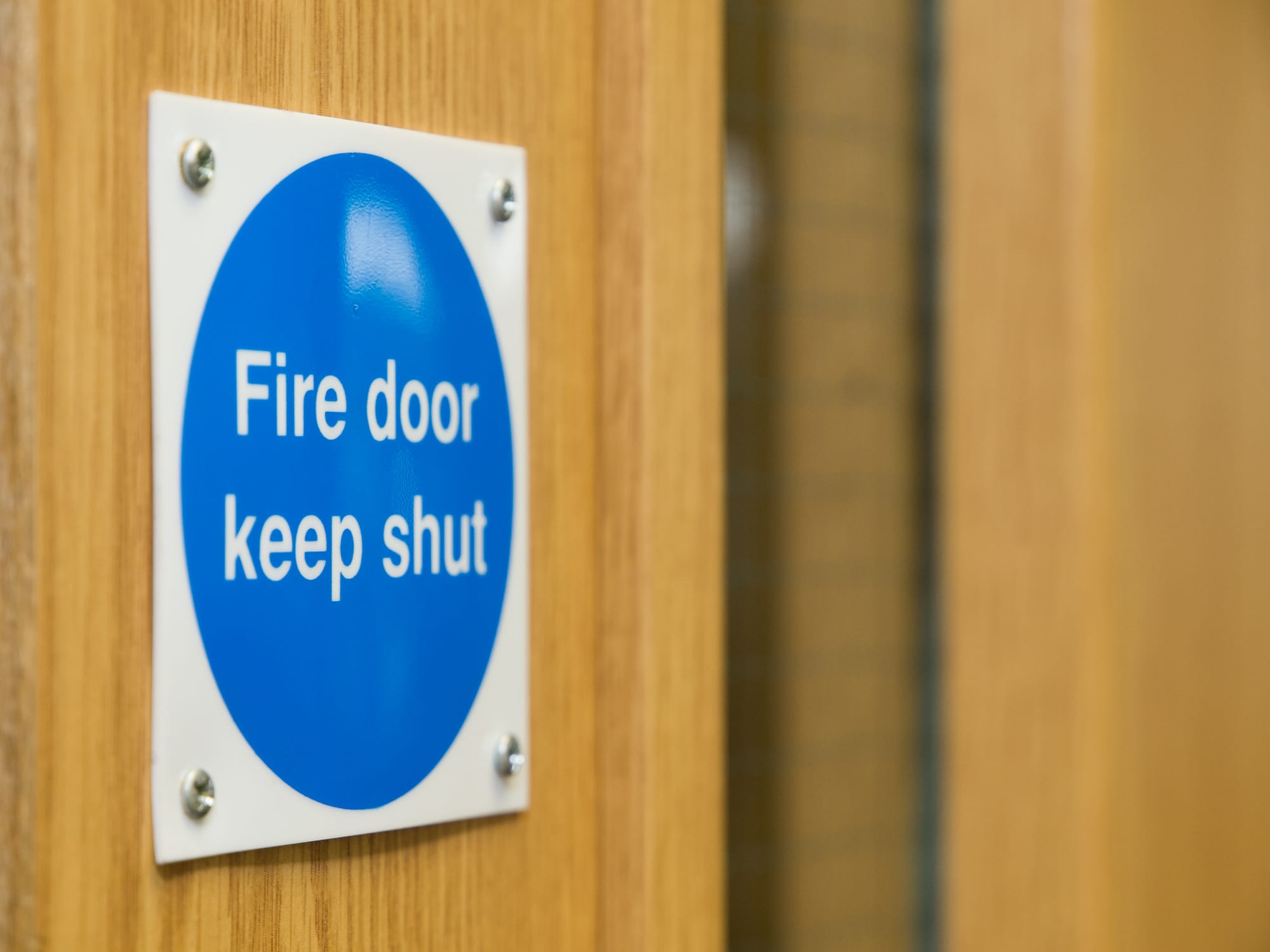
- Signage present: Where required, signs such as “Fire door keep shut” should be visible and appropriate for the door’s function.
How to set up a simple door inventory so checks are repeatable
Create a fire door register. Give each fire door a unique ID and location, for example “FD-1 First floor cross corridor”. Record door type and rating if known, such as FD30S, whether it is part of a protected escape route, and what hardware is fitted, for example closer type, hold-open device, or access control. Note anything that affects residents, such as delayed action closers or anti-ligature handles where used, and ensure these features still meet the fire strategy.
Weekly and monthly inspection method, make it quick but consistent
Start at the main entrance and follow a fixed route so nothing is missed. For each door, check the closer operation, then check the latch, then check gaps and seals, then check the frame and hinges. Finish by confirming the door is left in the correct state, usually closed. In care homes, pay extra attention to cross corridor doors used for progressive horizontal evacuation, stairway doors, and doors protecting higher risk rooms such as laundry, kitchens, and oxygen storage where applicable.
Common care home issues and what they mean for compliance
- Wedging for observation: Staff sometimes wedge doors for visibility or ventilation. Replace this practice with approved hold-open devices linked to the alarm, or revise observation plans and environmental controls.
- Carpets and thresholds: New flooring can cause doors to drag and not close. Treat this as a high priority repair because it directly affects performance.
- Door closers removed or adjusted: Closers are sometimes disabled because residents find doors heavy. Consider swing-free or delayed action devices where appropriate, but ensure they are suitable, fitted correctly, and maintained.
- Paint and refurbishment: Thick paint can seize seals, block latches, or conceal defects. Include post-maintenance checks after any decorating.
Defects, triage, and escalation
Use a simple risk rating. If the door will not close, will not latch, has missing seals, is significantly damaged, or is wedged, treat it as urgent and put interim controls in place immediately. Interim controls could include increased staff vigilance, relocating ignition sources, or restricting use of an area while repairs are arranged. Record the decision and target completion date. Avoid “monitoring” defects that directly affect fire and smoke control.
Recording that stands up to audit and supports CQC evidence
Your records should show the date, door ID, checks completed, pass or fail outcome, defects found, actions taken, who completed the check, and when the defect was closed. Keep evidence of contractor reports and invoices where repairs are completed. In CQC terms, this supports Safe and Well-led, showing governance, maintenance oversight, and learning from issues rather than repeated non-compliance.
Competence and support
Daily and weekly checks can be completed by trained staff using a clear checklist, but six-monthly and complex defects should be reviewed by a competent person with fire door knowledge. If you use external contractors, ensure they are experienced with fire doorsets and understand that ad hoc changes, such as replacing hinges or fitting untested ironmongery, can invalidate performance.
Link the schedule to your Fire Risk Assessment and building changes
Your Fire Risk Assessment should identify where fire doors are essential to your evacuation strategy and compartmentation. If you change the building layout, introduce new equipment, alter staffing levels, or change resident dependency, review whether the door inspection frequency should increase for certain areas. A practical schedule is not just a calendar, it is a control measure that should reflect the actual risk profile of the home.