Why Showering Can Trigger Distress in Dementia, and How to Make It Safer
Why this matters in practice
If you work in adult social care, you have probably seen it, a resident who is calm during breakfast can become frightened, resistant, or even aggressive the moment a shower is suggested. Staff then feel torn between dignity, infection control, skin integrity, and the pressure to keep routines moving. Families may say, “They always loved being clean,” and managers may worry about complaints or CQC questions. Yet for many people living with dementia, showering is not a neutral task. It can feel like an assault on privacy, comfort, control, and safety.
My view is that shower distress is rarely “challenging behaviour” in the person. It is more often a predictable reaction to a situation that has become confusing, physically unpleasant, or frightening. When we treat it as communication and redesign the experience, we can reduce distress and improve outcomes, while also strengthening compliance with the Mental Capacity Act, person centred care planning, and CQC expectations.
The problem, showering can trigger distress for several hidden reasons
Showering is complex. It combines noise, temperature changes, undressing, bright lights, water on the face, slippery floors, close physical contact, and rushing. Dementia can reduce the brain’s ability to process these inputs, interpret intentions, and tolerate uncertainty. A shower that you and I perceive as routine can be perceived as chaotic or threatening.
1) Sensory overload and misinterpretation
Water hitting the skin can feel like needles. The sound of the shower can be deafening. Spray can hit the face and trigger panic, especially if there are swallowing problems, breathlessness, or a fear of choking. Bathrooms often have echoes, extractor fans, and cold tiles. For someone with dementia, the brain may not filter these sensations properly, so the person experiences overwhelm.
2) Loss of privacy and dignity
Needing help to undress can be humiliating. Some people interpret assistance as being watched, controlled, or exposed. If the person no longer recognises staff, they may feel a stranger is trying to undress them. That can understandably trigger protective responses.
3) Reduced understanding and impaired sequencing
Showering requires sequencing: undress, step in, adjust temperature, wash, rinse, dry, dress. Dementia can impair executive function. If staff give multiple instructions or move quickly, the person may not keep up, then become distressed because they feel they are failing or being hurried.
4) Pain, mobility limitations, and fear of falling
Arthritis, neuropathy, old injuries, and fragile skin can make standing, lifting arms, or turning painful. A wet floor increases fear. Even with aids in place, the person may not trust them. If they have previously slipped, the bathroom becomes associated with danger.
5) Trauma history and personal boundaries
Some people have lived experiences that make forced undressing or being touched particularly distressing. They may not be able to explain this clearly now. Dementia can also reduce the ability to inhibit fear responses. If a care interaction resembles past trauma, resistance can escalate quickly.
6) Communication mismatches
In dementia, verbal processing may be slow. If staff speak from behind, use complex phrases, or correct the person repeatedly, the person may feel threatened. Tone, facial expression, and speed can matter more than the words.
7) Timing and environment
Many services schedule showers for staff convenience, not the resident’s rhythm. Morning care may coincide with confusion, hunger, fatigue, or medication effects. Bathrooms can also be too hot, too cold, or too bright. Seemingly small details can tip someone into distress.
The solution, make showering feel safe, predictable, and consent led
The best results usually come from a blend of risk assessment, individualised planning, staff skill, and environmental tweaks. You do not need expensive equipment to start. You do need a consistent approach and good documentation.
Step 1, reframe the goal
Instead of “get them showered,” aim for “support comfort, cleanliness, and dignity with the least distress.” That opens up options: a strip wash, a bath, a seated shower, hair wash at the sink, or splitting the task across the day. Cleanliness is important, but distress is a harm too. CQC will expect proportionate, person centred care, not rigid routines.
Step 2, assess capacity and consent properly
Showering involves bodily integrity and consent. Under the Mental Capacity Act, presume capacity unless proven otherwise, support decision making, and choose the least restrictive option. Many people can consent if you simplify choices and time it well.
- Offer simple options, for example “Would you like a wash at the sink, or a shower later?”
- Use one instruction at a time and allow time for processing.
- Check for signs of refusal, pulling away, freezing, repeated “no,” or distress signals.
- If the person lacks capacity for this decision, document best interests reasoning, including how you considered the person’s past preferences and present wishes.
If you find staff “having to” shower someone who is resisting, pause. That can drift into unlawful restraint. If restraint is being considered, it must be necessary and proportionate, with clear documentation, management oversight, and a plan to reduce it.
Step 3, build a personalised shower profile
Create a short, practical profile in the care plan. Keep it usable on a busy shift. Include what to do, what to avoid, and what works when distress starts.
- Best time of day, and worst time of day.
- Preferred gender of staff, and number of staff, often one calm person is better than two rushed people.
- Preferred language, key phrases, and topics that reassure.
- Sensory preferences, warmer room, towel on shoulders, low water pressure, hand held shower head.
- Triggers, water on face, fan noise, bright lighting, cold floor, being hurried.
- What success looks like, for example “wash underarms and perineal area, hair not essential today.”
Step 4, prepare the environment before you invite the person in
Many showers fail because preparation happens while the person is standing cold and confused. Prepare first, then invite.
- Warm the bathroom and reduce drafts. Pre warm towels if possible.
- Remove clutter, reduce echoes where possible, and consider turning off noisy fans briefly if safe.
- Use non slip mats and ensure grab rails are solid.
- Set up towels, toiletries, clean clothes, continence products, and dressing gown in order of use.
- Check water temperature with a thermometer or consistent method, and keep it steady.
Step 5, use an approach that protects dignity
Dignity is not only about covering the body, it is also about how we speak and how we pace the task.
- Knock, introduce yourself, and explain what is happening, even if you think they “won’t understand.”
- Ask permission before each step, “Is it alright if I help with your sleeve?”
- Keep the person covered with a towel or robe as much as possible.
- Avoid exposing the whole body at once, undress in sections.
- Use a calm voice, slow movements, and keep your face in view.
Step 6, offer control in small, real ways
Control reduces fear. Even when someone needs physical help, they can often choose and participate.
- Let them hold the flannel, even if you guide their hand.
- Let them test the water with their hand if safe.
- Offer choices that you can keep, “Would you like lavender soap or the plain one?”
- Use a handheld shower head and ask where to rinse next.
Step 7, reduce sensory load
Small sensory changes can be game changing.
- Use a handheld shower head and avoid spraying the face.
- Consider a shower visor or a dry flannel over the eyes when rinsing hair, if the person likes it.
- Lower water pressure if possible.
- Use soft lighting, not harsh overhead glare.
- Choose unscented products if smell seems to trigger nausea or agitation.
Step 8, use safe moving and handling that feels reassuring
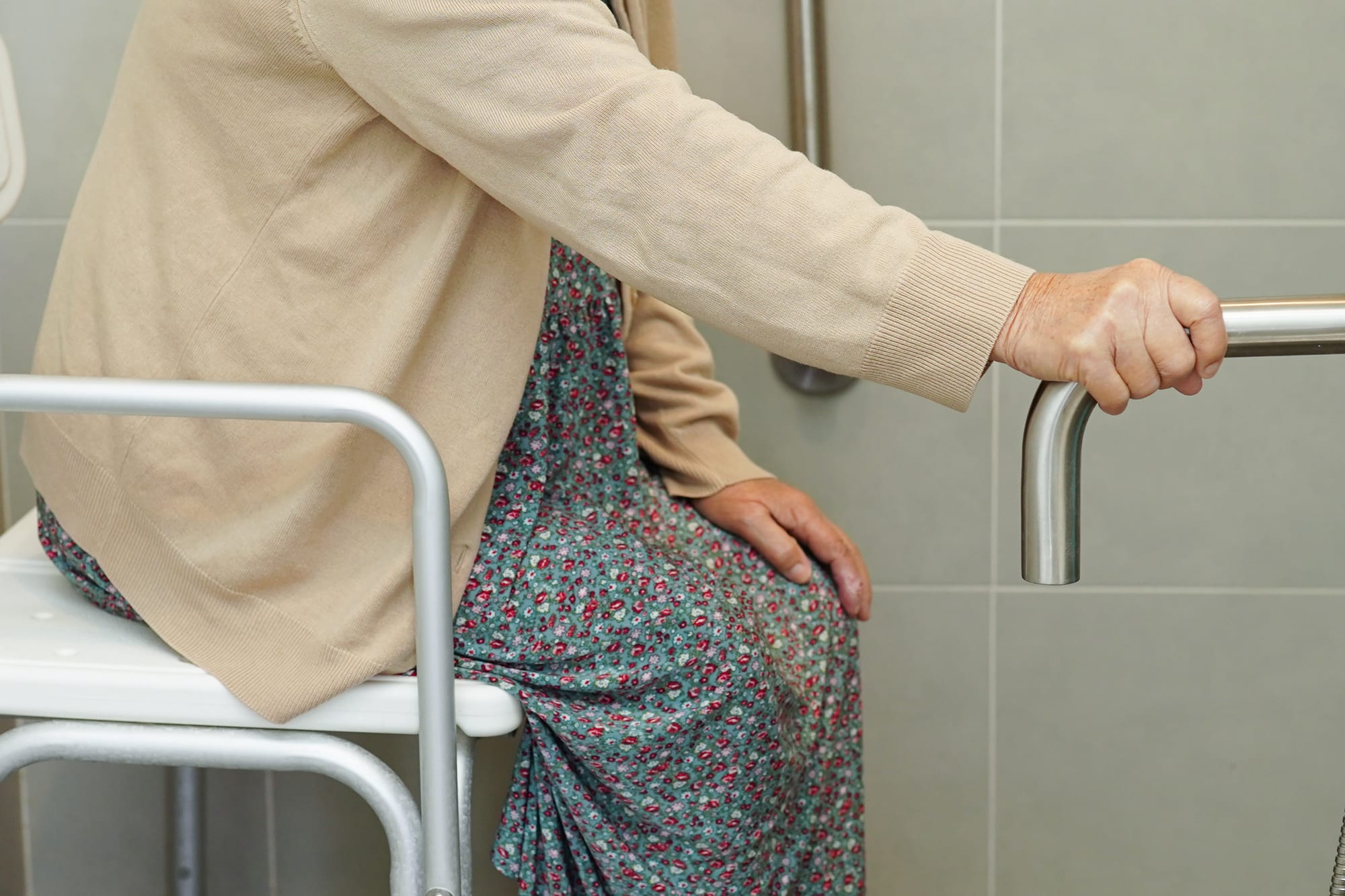
Even correct techniques can feel forceful if rushed. Explain what you are doing and use consistent prompts. If the person is unsteady, a shower chair can reduce fear and pain. Ensure equipment is maintained and staff are trained. Document what aid was used and how the person tolerated it.
Step 9, de escalation when distress starts
When distress rises, the priority is safety and calming, not completing the task. Continuing can teach the person that showers equal panic.
- Stop water flow if it is contributing.
- Cover the person with a warm towel or robe immediately.
- Step back slightly, reduce touch, and lower your voice.
- Validate feelings, “It feels too much, you are safe, we can pause.”
- Offer an exit route, “Let’s sit down and have a warm drink, we can try later.”
If the person becomes physically defensive, withdraw to a safe distance and follow your service’s safety procedures. Review the plan afterwards, do not just “try again the same way tomorrow.”
Step 10, consider alternatives that still meet hygiene needs
Some people with dementia never re accept showers. That does not mean hygiene is impossible. It means we adapt. A dignified strip wash can be thorough and less distressing. Hair can be washed at the sink with a towel around the shoulders. Perineal care can be done discreetly with privacy and warmth. The best solution is the one that keeps the person clean and comfortable with the least distress.
How to evidence good practice for quality assurance and CQC
From a MyQA quality assurance perspective, shower distress is a useful lens because it touches consent, dignity, staffing, training, risk, and person centred planning. Good care should be visible in records and consistent in practice.
- Care plan includes shower preferences, triggers, and step by step guidance.
- Mental capacity assessment is decision specific, current, and shows support offered to the person.
- Best interests decisions are documented if needed, with least restrictive options explored.
- Risk assessment covers falls risk, skin integrity, water temperature, and moving and handling.
- ABC style notes or similar show patterns, for example time of day triggers or specific sensory triggers.
- Incident reviews lead to plan changes, not repeated distress.
- Staff training includes dementia communication, consent, de escalation, and dignity in personal care.
Common mistakes that keep the problem going
- Rushing because “we have a schedule,” which increases fear and resistance.
- Using multiple staff too quickly, which can feel like being overpowered.
- Talking over the person or about the person while they are undressed.
- Assuming refusal equals lack of capacity, or assuming lack of capacity equals permission to proceed.
- Trying to complete the shower after distress begins, instead of stopping and resetting.
A practical script staff can use
Words matter less than tone, but a simple script can help consistency:
- “Hello, it’s Sam. I am here to help you feel fresh and comfortable.”
- “Would you like a wash at the sink now, or a shower after lunch?”
- “We will keep you warm. I will keep the towel on your shoulders.”
- “Tell me if anything feels too hot, too cold, or too fast.”
- “We can stop anytime.”
Where to start tomorrow, one improvement, not ten
If your service is struggling with shower related distress, pick one resident and run a small test of change. Adjust the timing, assign one consistent staff member, switch to a seated shower, or use a towel cloak for warmth. Measure distress, not just whether the shower was completed. Update the care plan after two or three attempts and share learning in handover.
Final thought
Showering can trigger distress in dementia because it combines vulnerability with sensory and cognitive overload. The safest response is not to push harder. It is to redesign the experience around consent, control, warmth, predictability, and dignity. When we do that, we protect the person, we protect staff, and we strengthen the service’s compliance with CQC standards and legal frameworks. That is the kind of practical, person centred quality assurance that MyQA exists to support.